
Most planned communities pick a palette and then let it drift. Tan house, beige house, taupe house — and within a decade, the vision is gone. Alys Beach never drifted. The place still looks like someone pressed pause on the rendering, and that is entirely by design.
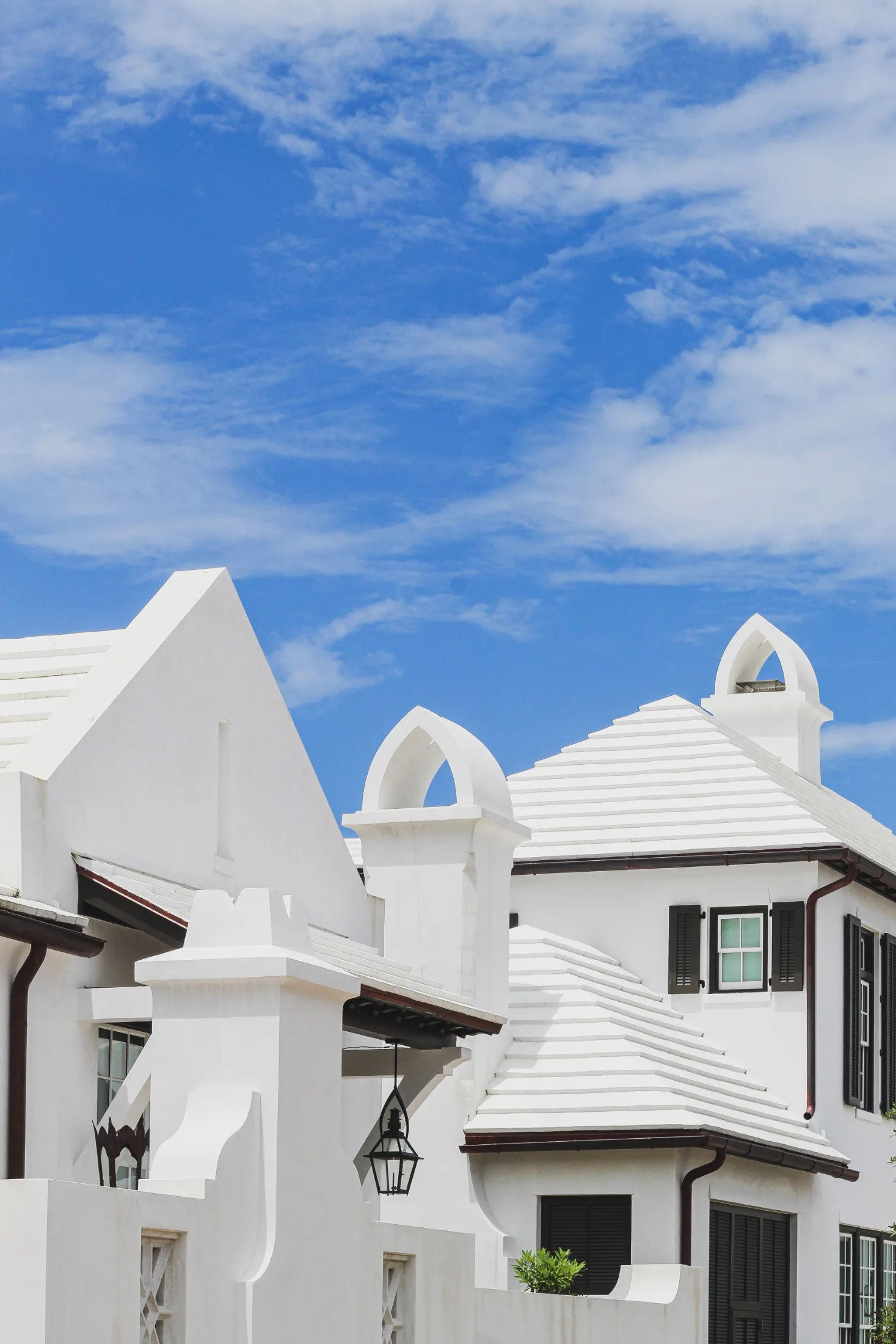
Every structure across the community's 158 acres in Walton County holds to the same white stucco exterior. The photos tell you what that actually means at the roofline: gothic-arched cupolas, stepped parapets, crisp gabled peaks, black shutters framing seafoam-green windows. The details are Bermudian in spirit, Mediterranean in geometry, and completely singular on this stretch of Florida's Scenic Highway 30A.
30A has no shortage of beautiful beach towns. What it lacks is visual coherence at this scale. Alys Beach made a bet that restraint — one color, enforced — would do more for long-term value and daily livability than variety ever could. Walk the streets at midday when the stucco is almost luminous and the logic is immediate.
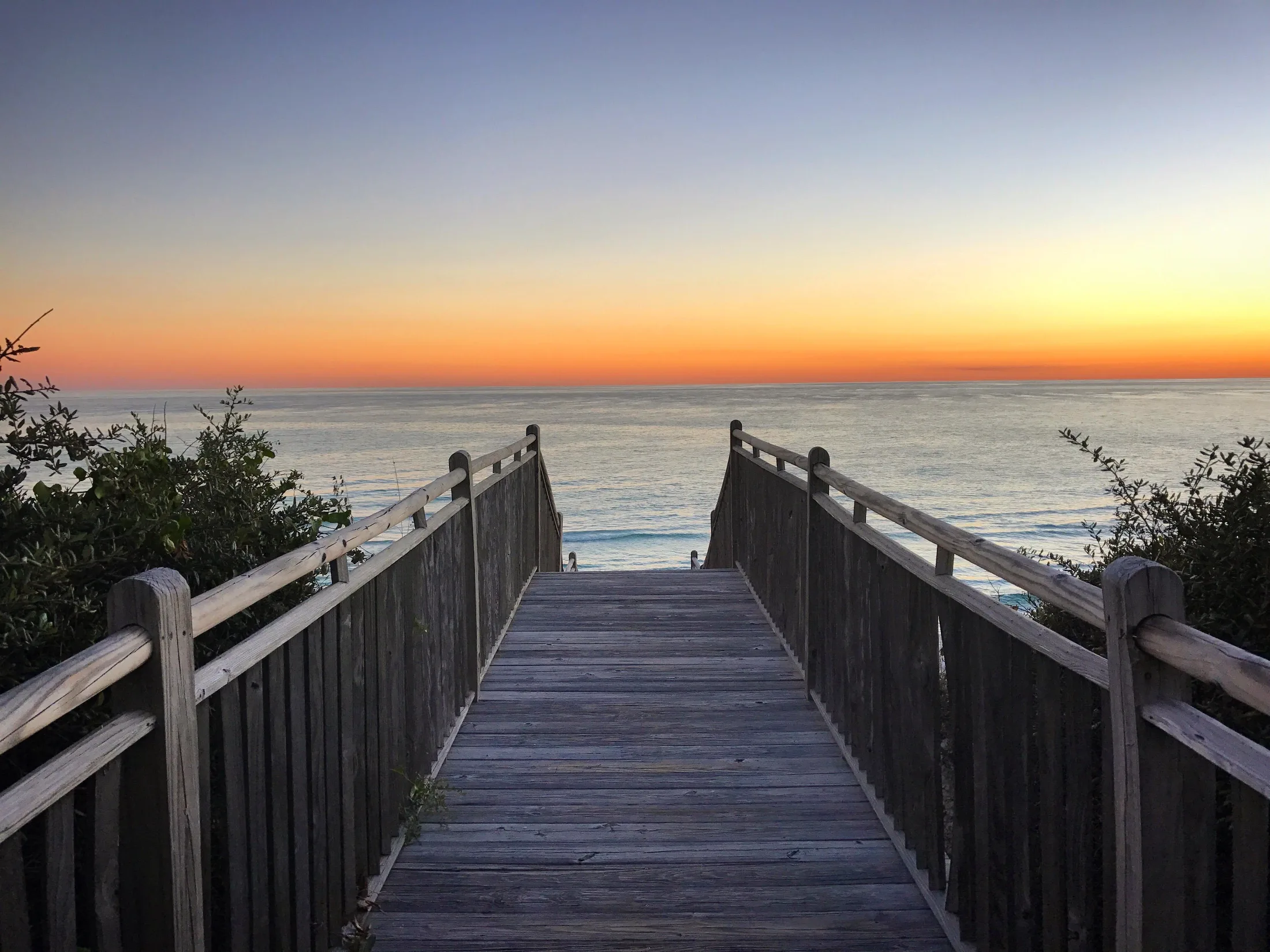
Then there's the other side of the equation. Two minutes from those white walls, a wooden boardwalk drops through the coastal scrub and delivers you to the Gulf of Mexico just as the sun hits the horizon. Orange into amber into flat silver water. Two figures barely visible at the bottom of the steps. Nobody in a hurry. That transition — controlled beauty to raw nature — is what the master plan was always about. The architecture frames the approach. The Gulf is the payoff.
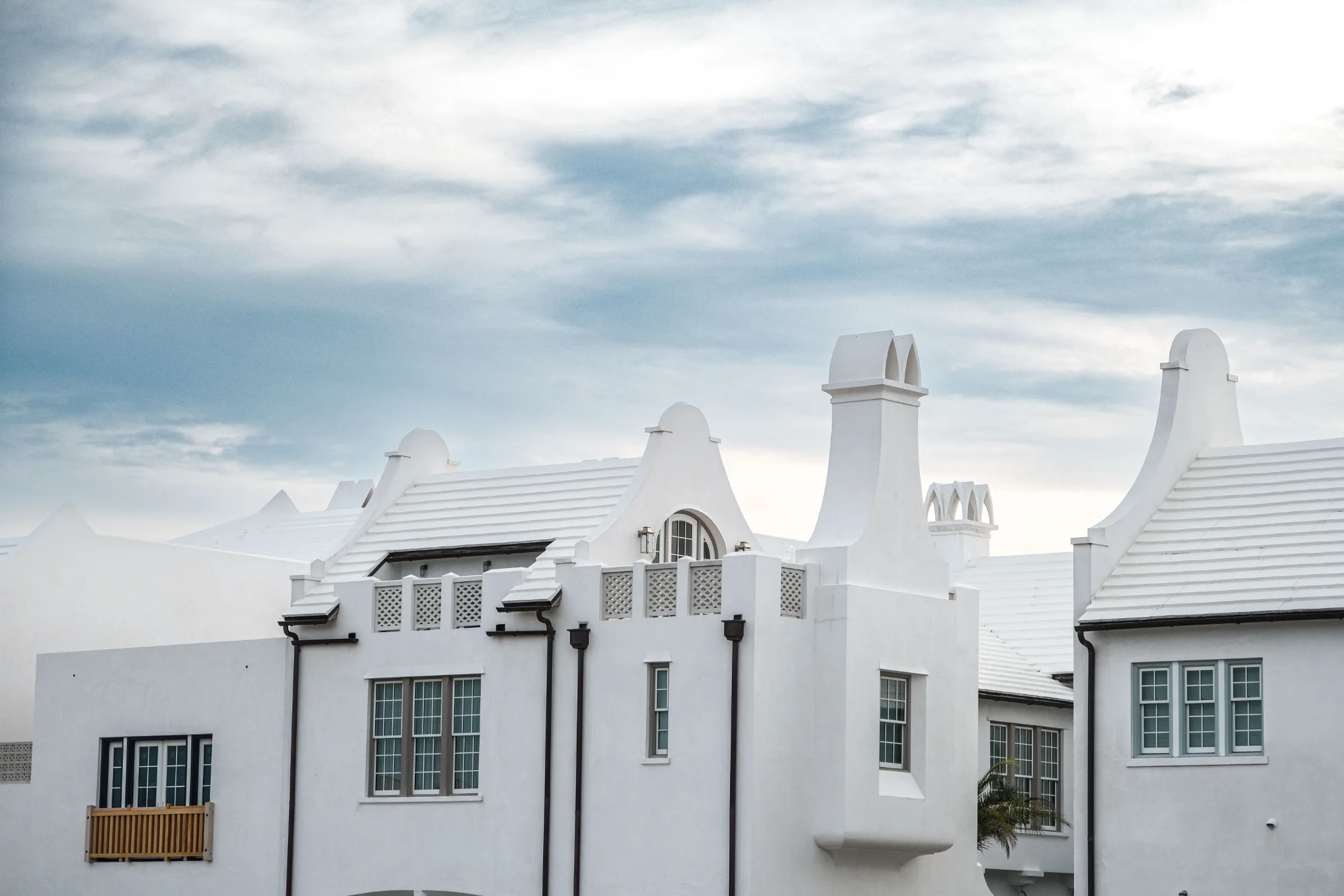
On an overcast morning the community reads entirely differently. The white goes cool and sculptural, almost monumental, and you notice the ironwork lanterns and the latticed parapet rails in a way the bright-sun version doesn't allow. Same 158 acres. Different light, same argument for why the single-palette rule was the right call.
A lot of coastal development on this Gulf Coast stretch has made a lot of promises. Alys Beach is one of the few places where the original promise and the current reality still match. That's rarer than the architecture.