
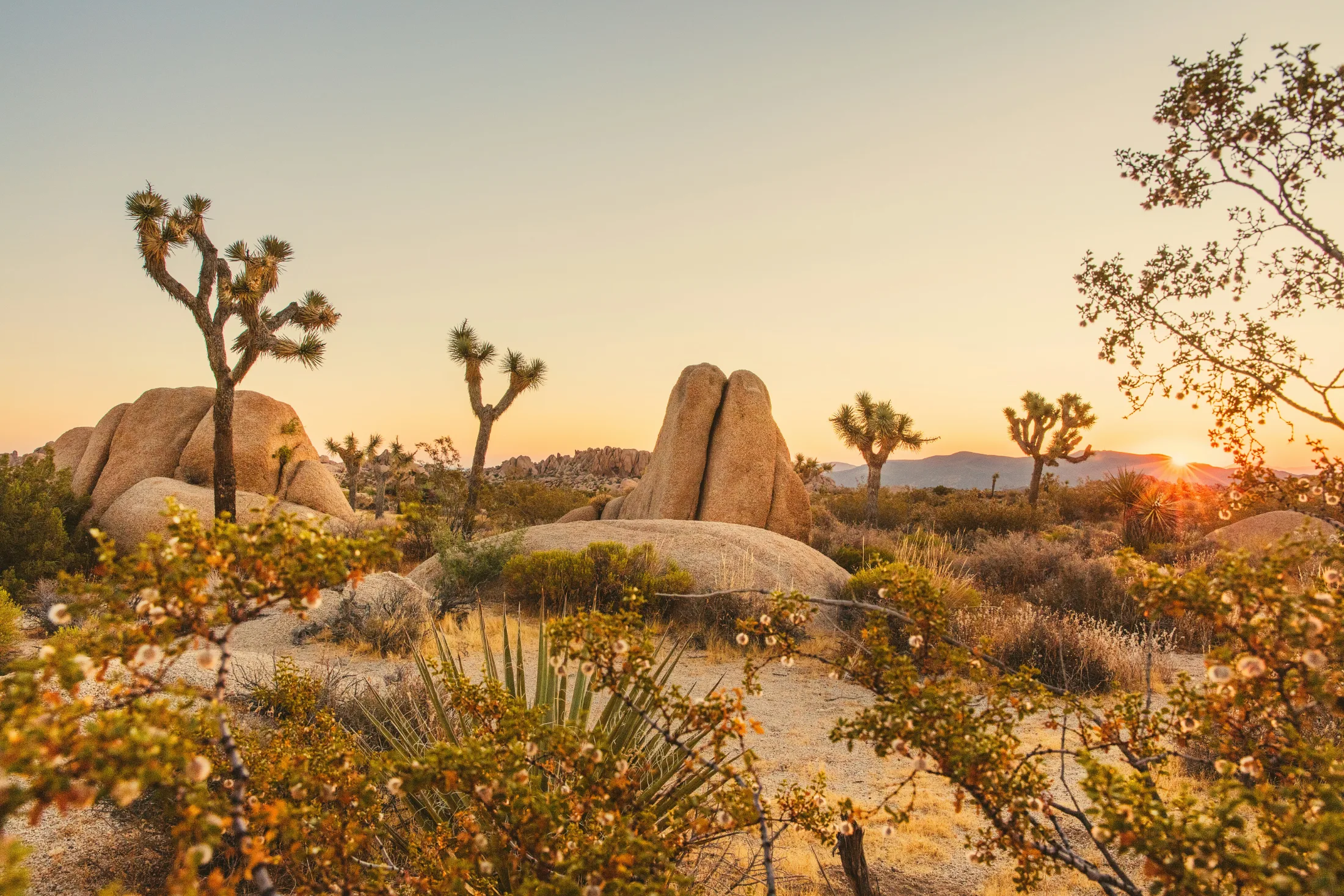
Drive out to the park at first light, watch the sun clear the mountains, and the question of why anyone stays out here tends to answer itself.
The boulders were here before the road. The trees before the visitors. At golden hour the low light turns the granite warm, the desert scrub catches color, and the whole flat expanse goes quiet in a way that makes the two-hour drive to a major American city feel like a rumor. That distance isn't a tradeoff. It's the product.
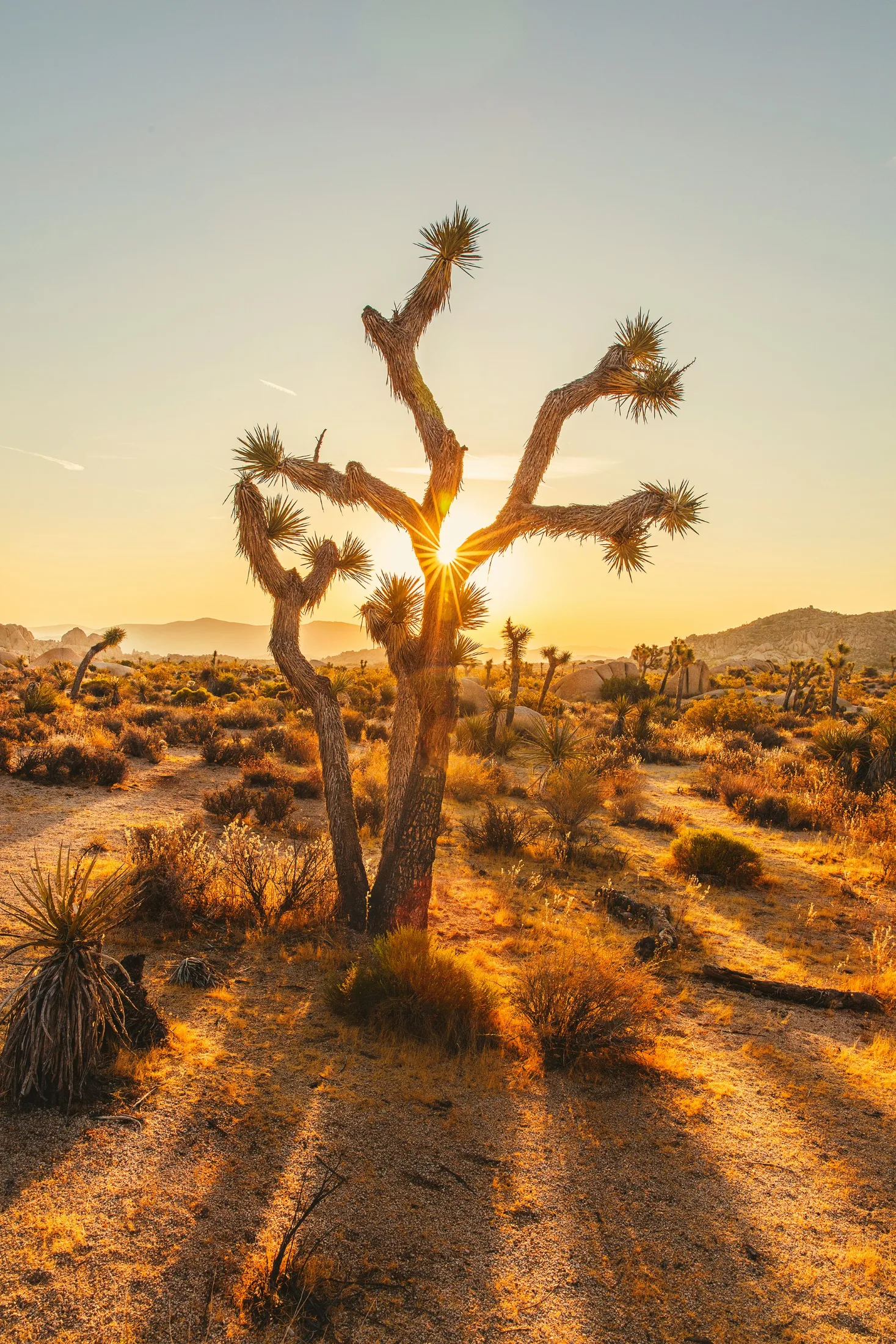
Locals know the park at hours tourists don't bother with — before the parking lots fill, after they empty. A Joshua tree silhouetted against a starburst sun, the ground gone copper, shadows stretching long across the sand: that's not a postcard. That's a Tuesday morning if you set an alarm.
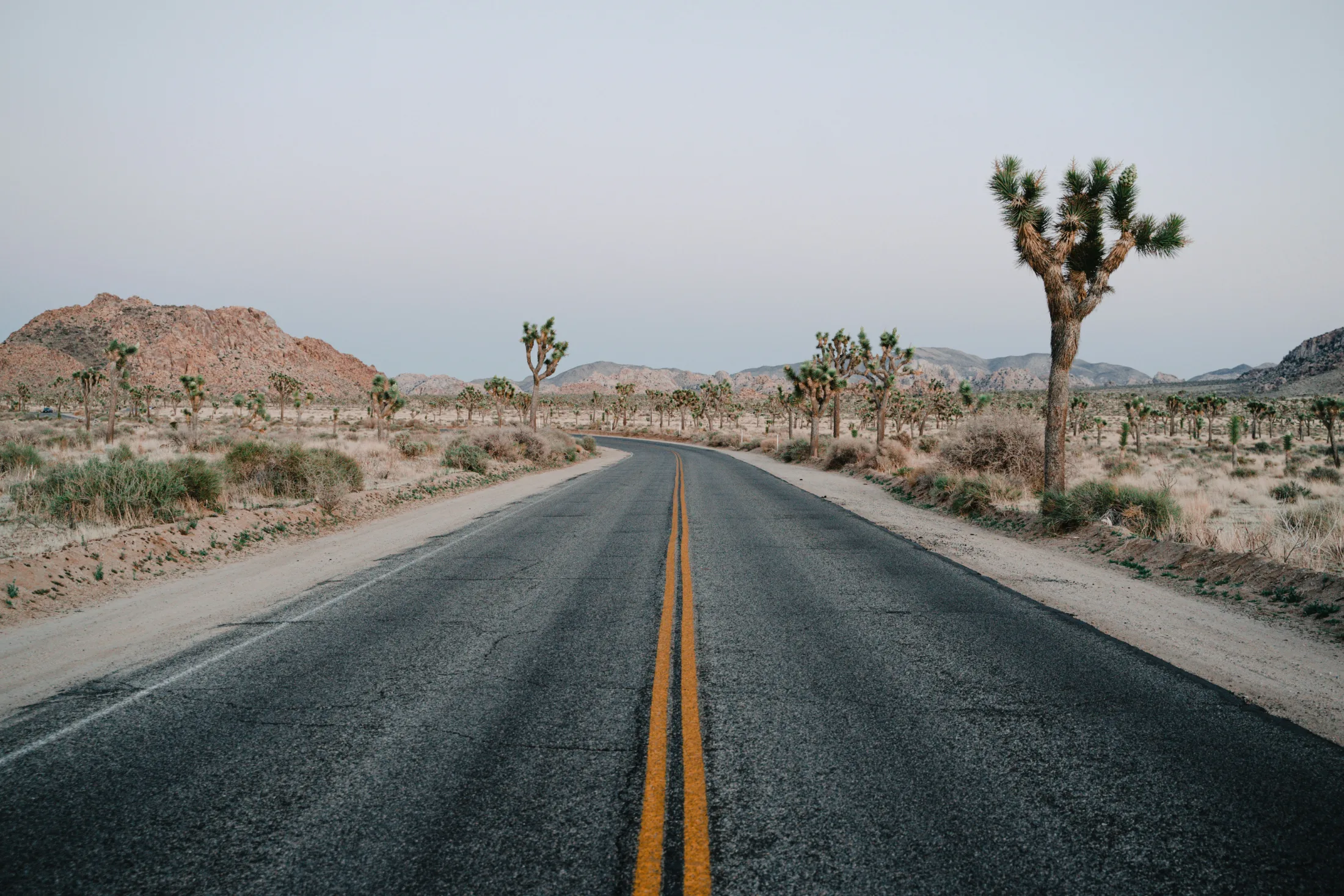
The road through the park is two yellow lines and trees on both sides standing at odd angles, each one having made a separate decision about which way to grow, mountains flat against the horizon. The inbox stops mattering somewhere around mile three. Whatever people tell themselves when they sign the lease out here — the weather, the property prices — this road is closer to the truth.
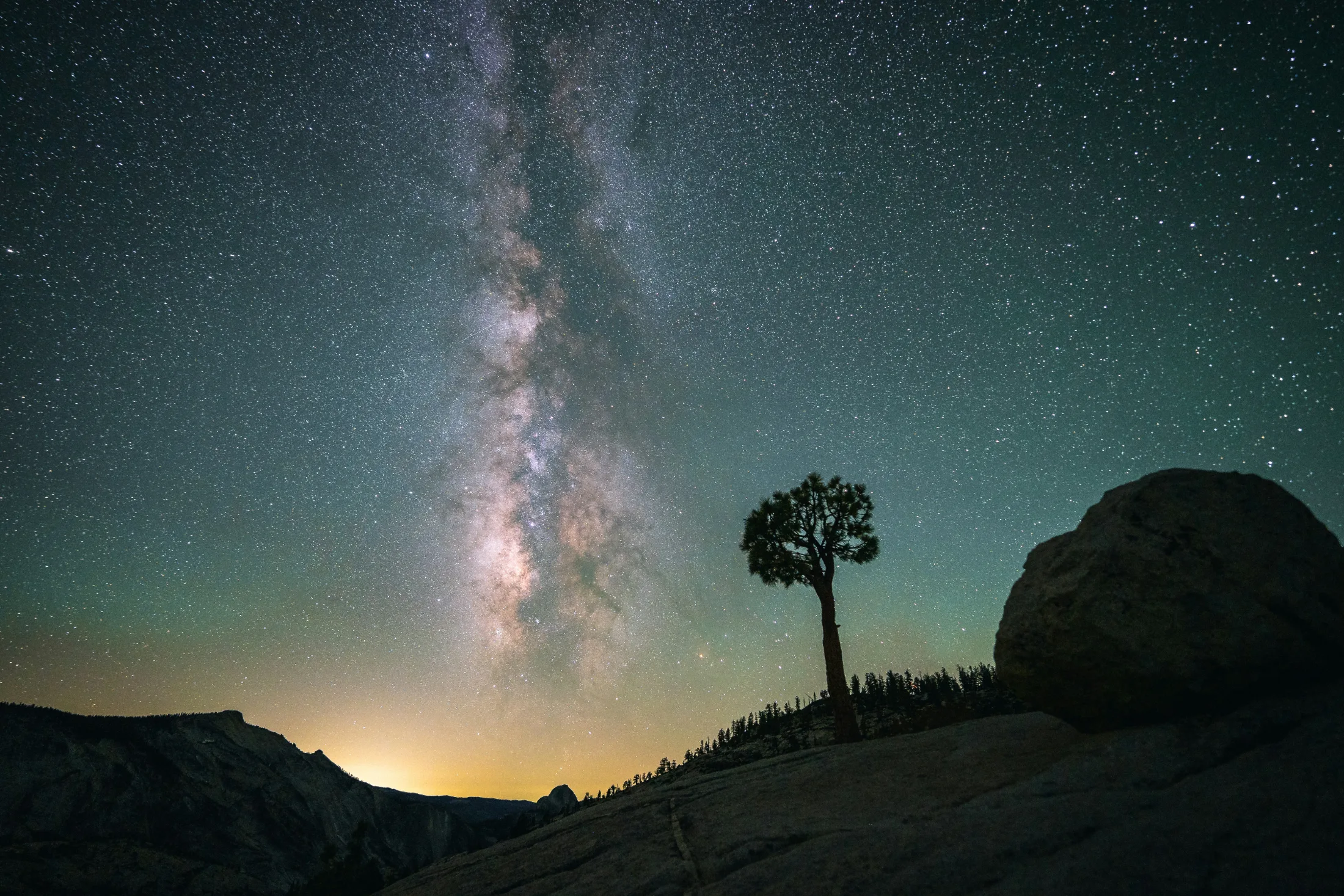
Then night comes. With no meaningful light pollution on the horizon, the Milky Way shows up as a physical object — a smear of actual light, not the faint suggestion you get from a city edge. A single tree on a granite ridge, the band of the galaxy rising behind it. You don't need a camera. You just need to be standing in the dark.
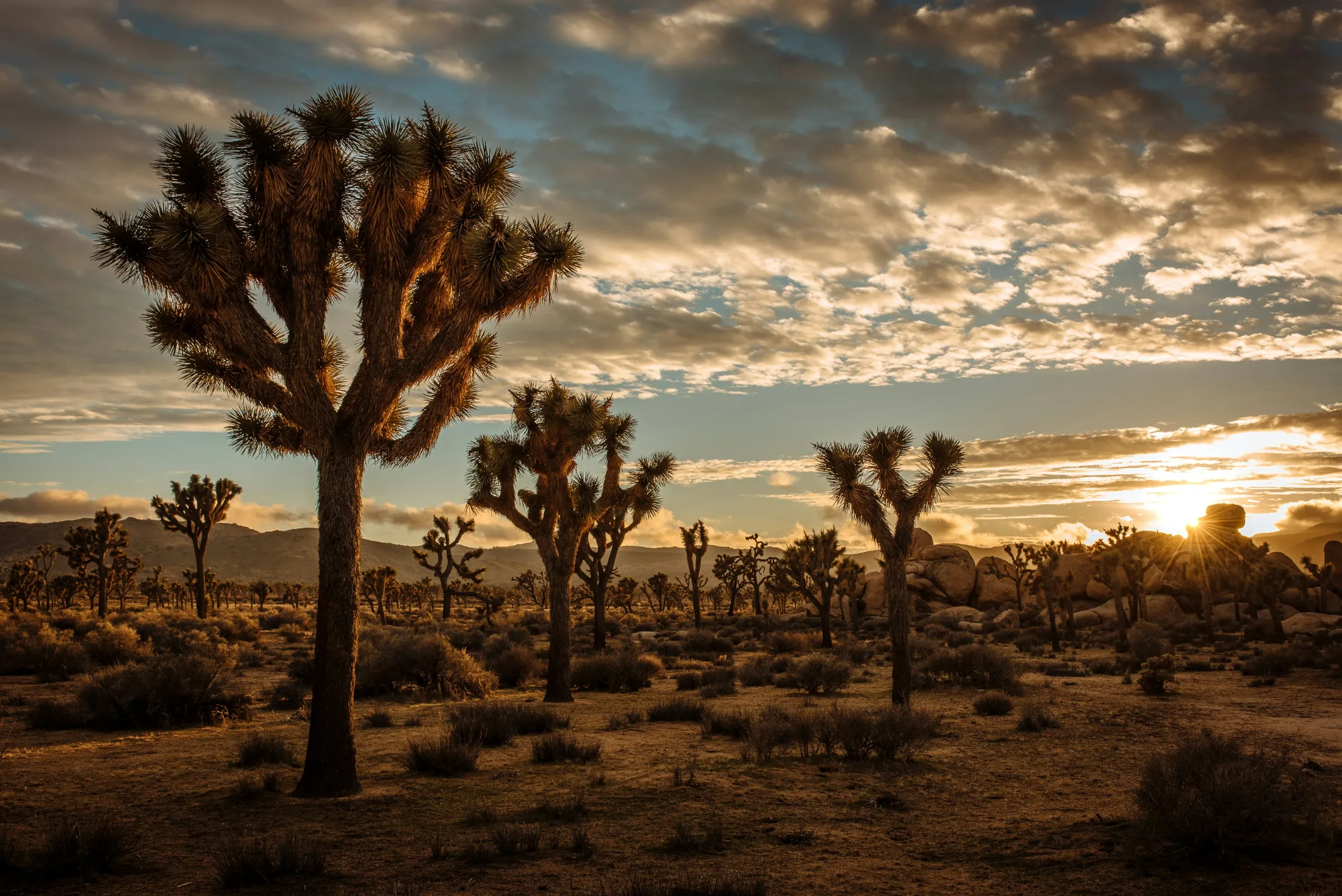
Some evenings the clouds roll in and the light goes amber, breaking through a bruised sky, hitting a whole grove of trees from the side all at once. Residents stop their cars for this. You can't not. That reflex — the willingness to just pull over and look — is something the desert installs in you quietly, and you only notice it when you try to leave.