
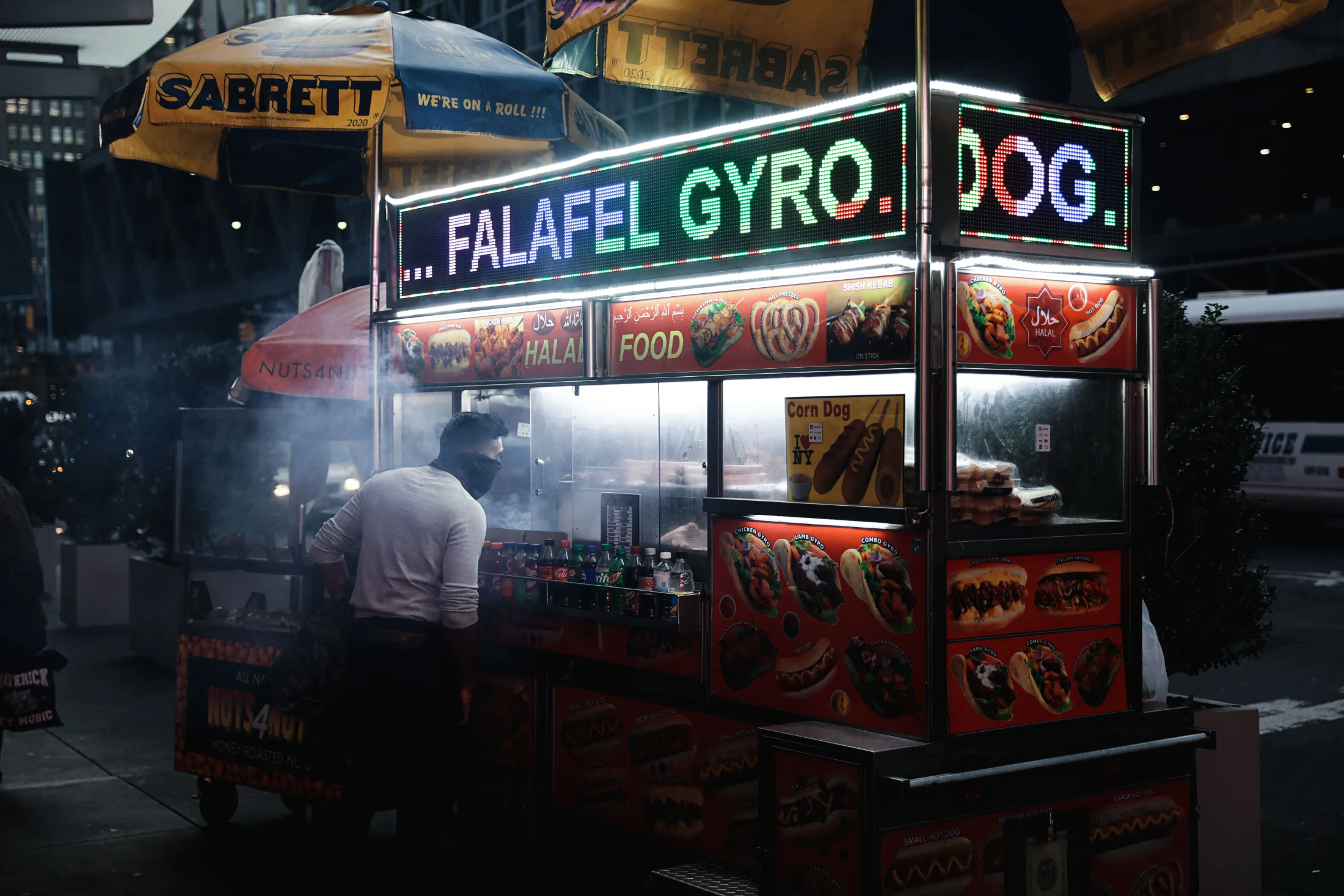
The LED marquee rolls through its sequence — FALAFEL. GYRO. DOG. — and the steam rises off the flat-top like the cart is exhaling. It's well past dark, the Sabrett umbrellas are still open, and someone is already waiting. This is the rhythm New York runs on.
Street food here isn't a novelty or a trend to document on your phone before you eat it. It's infrastructure. The cart operator working under that marquee doesn't need a dining room, a maitre d', or a reservation system. They need a permit, a propane line, and the stamina to be there before the city wakes up and after it stumbles home. That's the contract.
The People Running the Show
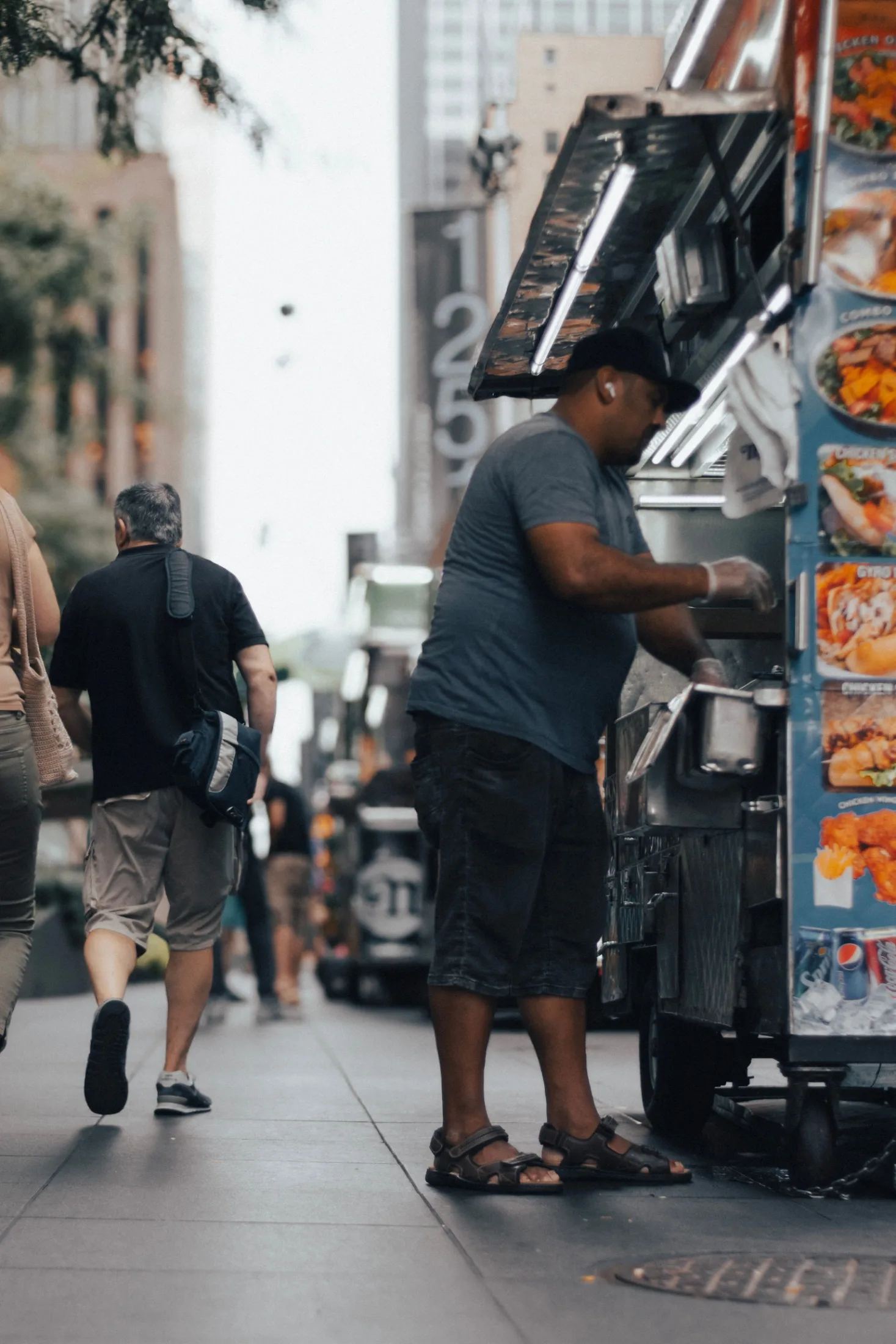
Watch a vendor work a lunch rush and you understand economy of motion. Every reach, every scoop, every foil fold is practiced to the point of reflex. The cart in this photo — parked on a midtown block, pedestrians flowing past like water around a stone — is a one-person operation running at full clip. Earbuds in. Eyes on the steel. The city hums around him and he doesn't look up because he doesn't need to. He knows exactly who's coming.
The vendors who last in this business aren't just cooks. They're logistics operators who happen to feed people. They track which blocks get foot traffic at which hour, which city events will spike demand, when to pack up and when to hold position through the cold. The knowledge is hyper-local and hard-won, passed between communities — Bangladeshi, Egyptian, Mexican, West African — that have made the sidewalk economy their own for decades.
What the Cart Sells You That a Restaurant Can't
There's a transaction happening at a street cart that goes beyond the foil-wrapped gyro or the paper tray of chicken over rice. You are buying immediacy. You are buying the particular pleasure of eating standing up, in motion, with the city as your dining room. No hostess, no ambient playlist curated by a beverage director, no bill that arrives folded inside a leather sleeve. Just the food, the sidewalk, and the next block to cover.
The halal cart solved a real problem and built a city habit out of it. Chicken and lamb over rice with white sauce is a New York staple not because of marketing but because it delivers a hot, filling, affordable meal that requires nothing of you except a few minutes and a few dollars. The falafel, the shish kebab, the corn dog on the LED scroll — each one a small act of feeding a city that cannot slow down long enough to sit.
Summer, On Wheels
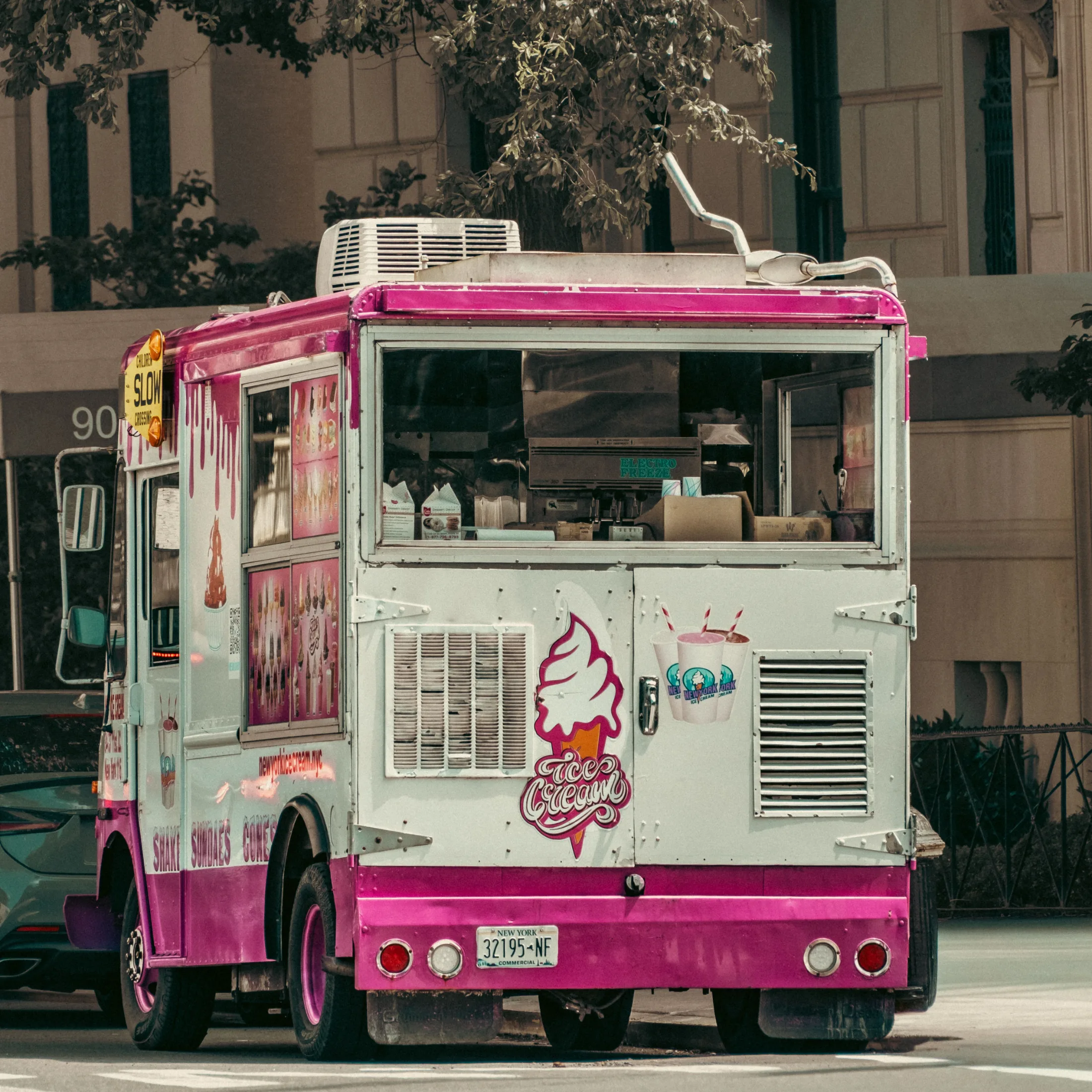
Then there's this: a pink-trimmed ice cream truck idling on a quiet block, New York commercial plates, the words SHAKES SUNDAES CONES running along the side panel. The ice cream truck runs on different rules than the halal cart. It doesn't anchor to a corner. It moves. It shows up where children are, where heat is, where the sound of the jingle means relief. The appeal is uncomplicated and that's the point.
In summer, these trucks become neighborhood fixtures as reliable as the hydrant someone cracked open two blocks over. You don't look them up. You hear them, or you spot the pink from across the street, and you go. That impulsiveness is baked into the product.
After Dark, the Carts Stay On
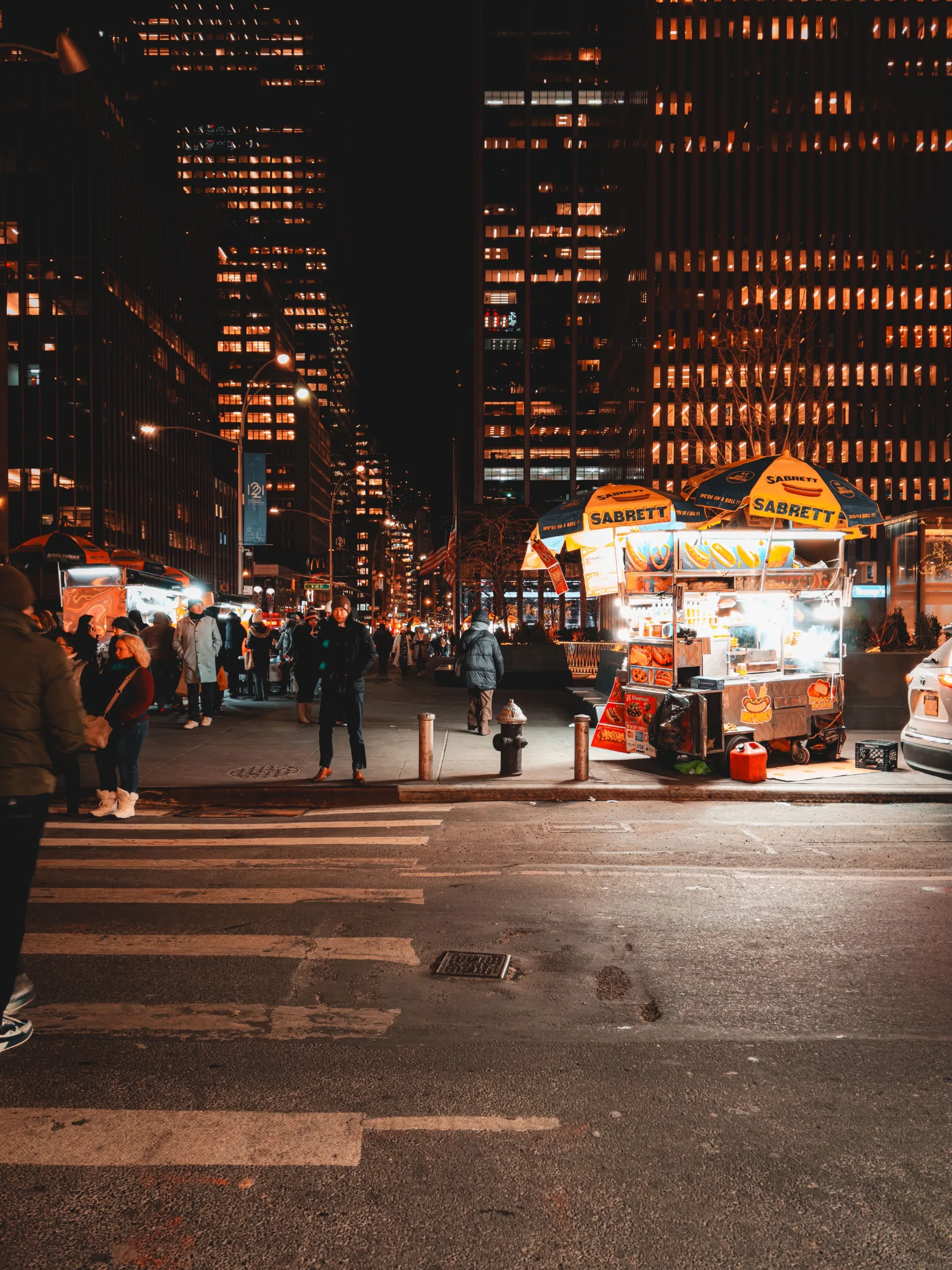
Midtown after dark. The office towers are still lit — someone is always working — and the Sabrett carts are still open on the avenue, yellow umbrellas catching the streetlight, a knot of people gathered at the corner. This is the scene that never makes a travel magazine because it's too ordinary, too unglamorous. Which is exactly why it matters.
The hot dog cart is the most stripped-down version of this whole arrangement. Sabrett has been on New York sidewalks long enough that the yellow and blue umbrella reads as civic furniture. Nobody romanticizes a hot dog cart. You just stop, you order, you go. And in that simplicity is the whole argument for street food as a way of life: it asks nothing of you except hunger and a couple of dollars, and it gives you back the city at eye level, one block at a time.
New York has always fed itself this way — not in spite of the pace, but because of it. The cart is the kitchen. The sidewalk is the table. And the city keeps moving.